Showing posts with label Colossus. Show all posts

Friday, 2 November 2012

Unit 2: Research into 'Colossus' (Media)

Related searches: 
  1. Shadow of the Colossus
  2. Colossus (Comics) 
  3. Starcraft (Enemy - Colossus) 
  4. The Amazing Colossal Man (Film)
  5. Princess Monoke (Film) 
  6. Troll Hunter (Film) 
Shadow of the Colossus
Shadow of the Colossusis an action-adventure game published by Sony Computer Entertainment (SCEI) for the PlayStation 2.
The game's storyline focuses on a young man named Wander who enters a forbidden land. Wander must travel across a vast expanse on horseback and defeat sixteen massive beings, known simply as colossi, in order to restore the life of a girl named Mono. The game is unusual within the action-adventure genre in that there are no towns or dungeons to explore, no characters with which to interact, and no enemies to defeat other than the colossi. Shadow of the Colossus has been described as a puzzle game, as each colossus' weakness must be identified and exploited before it can be defeated.
(Despite this being a game, I've included it into my research due to the large amount of artwork surrounding it.)
Figure 1
Figure 2
Figure 3

The image below is concept art from a possible film adaptation of the game

Figure 4
Colossus (Comics)

Colossus (Piotr Nikolaievitch Rasputin) is a fictional character, a superhero in the Marvel Comics universe. Created by writer Len Wein and illustrator Dave Cockrum, he first appeared in Giant-Size X-Men #1 (May 1975). A Russian mutant, the character is a member of the X-Men, and is by far the physically strongest member of the team, being able to transform into a strong metallic form. Even without his powers he holds a physically imposing figure standing at 6' 7"

File:AstonColossus.png
Figure 5

Starcraft (Game)
An enemy featured in the game 'Starcraft', called a Colossus: 


Figure 6
The Amazing Colossal Man (Film)
The Amazing Colossal Man is a 1957 black-and-white science fiction film, directed by Bert I. Gordon and starring Glenn Langan. The film revolves around a 60 foot mutant man produced as the result of an atomic accident.
Figure 7
Princess Mononoke (Film)

The story concentrates on involvement of the outsider Ashitaka in the struggle between the supernatural guardians of a forest and the humans of the Iron Town who consume its resources. There can be no clear victory, and the hope is that relationship between humans and nature can be cyclical.


Figure 8
Figure 9
Figure 10
Troll Hunter (Film) 
A group of students investigates a series of mysterious bear killings, but learns that there are much more dangerous things going on. They start to follow a mysterious hunter, learning that he is actually a troll hunter.

Figure 11
Figure 12


Bibliography 
Shadow of the Colossus information taken from: http://en.wikipedia.org/wiki/Shadow_of_the_Colossus
Colossus (Comics) information taken from: http://en.wikipedia.org/wiki/Colossus_(comics)
The Amazing Colossal Man information taken from: http://en.wikipedia.org/wiki/The_Amazing_Colossal_Man 
Princess Mononoke information taken from: http://en.wikipedia.org/wiki/Princess_Mononoke 
Troll Hunter information taken from: http://www.imdb.com/title/tt1740707/


Images
Figure 1 - http://fc03.deviantart.net/fs8/i/2005/291/5/c/sketch_of_the_colossus_by_arcipello.jpg 
Figure 2 - http://static.gamesradar.com/images/mb/GamesRadar/us/Daily/2010/05-May/27/HD%20ico%20shadow%20of%20the%20colossus/HD_colossus_1--article_image.jpg 
Figure 3 - http://media.officialplaystationmagazine.co.uk/files/2012/05/18__Shadow_of_the_Colossus_playstation.jpeg 
Figure 4 - http://www.nerdsraging.com/wp-content/uploads/2012/05/Shadow-of-the-Colossus1.png
Figure 5  - http://en.wikipedia.org/wiki/File:AstonColossus.png
Figure 6 - http://www.starcraft2strategymasters.com/wp-content/uploads/ColossusBen.jpg 
Figure 7 - http://exclamationmark.files.wordpress.com/2006/08/colossal.jpg
Figure 8 - http://data.whicdn.com/images/35550292/Forest_spirit__s_grove_by_Artimis07_large.jpg
Figure 9 - http://25.media.tumblr.com/tumblr_m5hq84G5sw1qmnajvo2_500.jpg 
Figure 10 - http://malazaninvasion.files.wordpress.com/2011/09/mono1.png  
Figure 11 - http://www.horrorphilia.com/wp-content/uploads/2011/03/cdn.extracine.com_.files_.2011.02.the-troll-hunter11.jpg
Figure 12 - http://cghub.com/files/BlogPost/350/754_large.jpg 

Thursday, 1 November 2012

Unit 2: Research into 'Colossus' (Real World)

Related real world searches for Colossus:
  1. The colossus (Painting)
  2. Colossus - The Forbin Project 
  3. Colossus (Computer) 
  4. Colossus of Rhodes 

The colossus (Painting)

The Colossus (1812 ), also called giant , Panic and Storm ,is a painting traditionally attributed to Francisco de Goya in which a colossal giant stands behind some hills that hide your legs-thigh -, occupying the centre of the image, surrounded by clouds and fists. The lower third of the canvas is occupied by a dark valley where a multitude of people and livestock are scattering chaotically in different directions. 


File:El coloso.jpg
Figure 1 

Colossus - The Forbin Project

Colossus: The Forbin Project is a 1970 American science fiction thriller film. It is based upon the 1966 novel Colossus, by Dennis Feltham Jones, about a massive American defence computer, named Colossus, becoming sentient and deciding to assume control of the world. 

Colossus (Computer)

As mentioned above; Colossus was the world's first electronicdigitalcomputer that was at all programmable. The Colossus computers were used by British codebreakers during World War II to help in the Cryptanalysis of the Lorenz cipher. Without them, the Allies would have been deprived of the very valuable intelligence that was obtained from reading the vast quantity of encrypted high-level German Army messages. Colossus used thermionic valves (vacuum tubes) to perform Boolean operations and calculations.

File:Colossus.jpg
Figure 2

Colossus of Rhodes

The Colossus of Rhodes was a statue of the Greek Titan Helios, erected in the city of Rhodes on the Greek island of Rhodes by Chares of Lindos between 292 and 280 BC. It is considered one of theSeven Wonders of the Ancient World. It was constructed to celebrate Rhodes' victory over the ruler of Cyprus, Antigonus I Monophthalmus, whose son unsuccessfully besieged Rhodes in 305 BC. Before its destruction in 226 BC—due to an earthquake—the Colossus of Rhodes stood over 30 meters (107 ft) high, making it one of the tallest statues of the ancient world.
Figure 3


Bibliography
The colossus Information taken from: http://es.wikipedia.org/wiki/El_coloso  
Forbin Project information taken from: http://en.wikipedia.org/wiki/Colossus:_The_Forbin_Project 
Colossus (Compter) information taken from: http://en.wikipedia.org/wiki/Colossus_computer
Colossus of Rhodes information taken from: http://en.wikipedia.org/wiki/Colossus_of_Rhodes

Images
Figure 1 - http://commons.wikimedia.org/wiki/File:El_coloso.jpg
Figure 2 - http://en.wikipedia.org/wiki/File:Colossus.jpg
Figure 3 - http://www.personal.psu.edu/jgh5040/colossus1.jpg

Unit 2: Research into 'Pagan' (Pagan Island)

Various searches that derive from the word 'Pagan' include:

  1. Pagan Island
  2. Paganism
  3. Pagan Kingdom 

Pagan Island


 ‘Pagan is part of the Commonwealth of the Northern Marianas, an island chain of volcanoes that form the margin between the Pacific Ocean (to the East) and the Philippine Sea (to the West). Pagan is made up of two stratovolcanoes separated by an isthmus; it is one of the more volcanically active islands in the Marianas. The island was completely evacuated in 1981 when a large eruption forced the small Micronesian community to flee. Before the early month of 2012, the most eruption occurred in 2010.’ 


Figure 1
Commonwealth of the Northern Marianas 

The Northern Mariana Islands, officially the Commonwealth of the Northern Mariana Islands(CNMI), is one of the two insular area Commonwealths of the United States of America, the other being Puerto Rico. Both can also be classified as unincorporated, organisedterritories of the United States.
Occupying a strategic region of the western Pacific Ocean, it consists of 15 islands about three-quarters of the way fromHawaii to the Philippines. The United States Census Bureaureports the total land area of all islands as 179.01 square miles (463.63 km2).
Figure 2

Stratovolcanoes 


'Stratovolcanoes, also known as composite cones, are the most picturesque and the most deadly of the volcano types. Their lower slopes are gentle, but they rise steeply near the summit to produce an overall morphology that is concave in an upward direction. The summit area typically contains a surprisingly small summit crater. This classic stratovolcano shape is exemplified by many well-known stratovolcanoes, such as Mt. Fuji in Japan, Mt. Mayon in the Philippines, and Mt. Agua in Guatemala.'
Figure 3

Isthmus
An isthmus is a narrow strip of land connecting two larger land areas, usually with water on either side.


Bibliography
Pagan Island information taken from: http://earthobservatory.nasa.gov/IOTD/view.php?id=77503
Commonwealth of the Northern Marianas information taken from: http://en.wikipedia.org/wiki/Northern_Mariana_Islands
Isthmus information taken from: http://en.wikipedia.org/wiki/List_of_isthmuses


Images

Figure 2 - http://static.ddmcdn.com/gif/willow/geography-of-northern-marianas0.gif 

Monday, 29 October 2012

Unit 2: The Secret Lair of the Pagan Colossus


Colossus: 
Adjective
1. extraordinarily great in size, extent, or degree; gigantic; huge.
2. of or resembling a colossus
3. ( initial capital letter ) Architecture . noting or pertaining to a classical order whose columns or pilasters span two or more stories of a building.
(http://dictionary.reference.com/browse/colossal)

Pagan:
Noun
1. one of a people or community observing a polytheistic religion, as the ancient Romans and Greeks. polytheist. 
2. a person who is not a Christian, Jew, or Muslim. heathen, gentile; idolater; non-believer. 
3. an irreligious or hedonistic person.
4. a person deemed savage or uncivilised and morally deficient.

Adjective
5. pertaining to the worship or worshippers of any religion that is neither Christian, Jewish, nor Muslim. heathen, heathenish, idolatrous, polytheistic. Christian, Jewish, Muslim, monotheistic.
6. of, pertaining to, or characteristic of pagans. 
7. irreligious or hedonistic. unbelieving, godless, atheistic, agnostic; impious, profane, sacrilegious, unholy, ungodly. religious, pious, devout. 
8. of a person deemed backward, savage, or uncivilised or morally or spiritually stunted. primitive, uncultivated, uncultured, heathenish, barbaric, barbarous, philistine. civilized, cultivated, cultured, urbane.

'Colossus' influences in media:

http://www.deviantart.com/

http://www.wired.com/news/images/full/colossus03_f.jpg
http://media.officialplaystationmagazine.co.uk/
http://www.nerdsraging.com

http://img.hexus.net/


'Pagan' influences in media: 

http://wp.patheos.com.s3.amazonaws.com/blogs/
'This film is downright Jungian in its expression of these mysteries, using the imagery of pagan Scotland to weave a world where the human connection to the natural world is seen as the secret to happiness and fulfillment' (Peg Aloi, 2012)

http://i.cdn.turner.com/
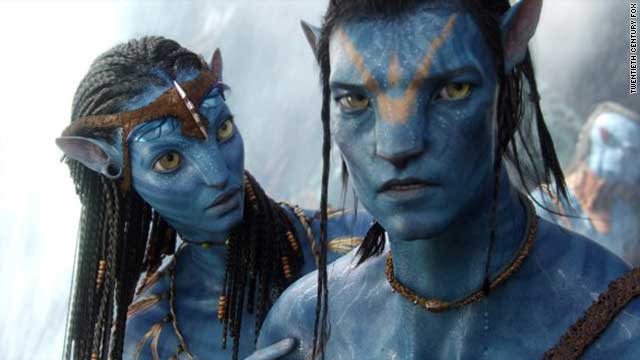
'Second, it is a narrative incarnation of the pagan worldview of earth worship as described in the Gaia Hypothesis, a scientific theory of planets as living organisms with consciousness. The notion of nature worship in opposition to the Judeo-Christian notion of man’s dominion over nature is an ancient theme that originates in Israel’s battle for the Promised Land with the pagan nature religion of the Canaanites' ( Brian Godawa, 2011)

http://hilery.files.wordpress.com/2010/10/princess_mononoke.jpg
' The story is a powerful tale of environmental abuse, disaster, and valiant honor. Land spirits, animal spirits, and various Gods figure prominently throughout the film and we see what happens when mankind falls out of balance with them.' (Krasskova, 2010)

http://tinribs27.files.wordpress.com/2011/09/wicker-man-lee.jpg?w=300&h=206
'The original “Wicker Man” is a story about sacrifice and renewal, about Pagan and Christian theological differences, and about sacral kingship' (Krassokova, 2010)

Bibliography

quotes

Brian Godawa. In: http://www.equip.org [online] At: http://www.equip.org/articles/avatar-a-postmodern-pagan-myth/ (Accessed on 29/10/12)