Showing posts with label Pagan. Show all posts

Thursday, 1 November 2012

Unit 2: Research into 'Pagan' (Pagan Kingdom)


Various searches that derive from the word 'Pagan' include:

  1. Pagan Island
  2. Paganism
  3. Pagan Kingdom  

Pagan Kingdom 
Also known as the Pagan Dynasty or Pagan Empire 

The first kingdom to unify the regions that would later constitute modern-day Burma (Myanmar). Pagan's 250-year rule over the Irrawaddy valley and its periphery laid the foundation for the ascent of Burmese language and culture, the spread of Burman ethnicity in Upper Burma, and the growth of Theravada Buddhism in Burma and in mainland Southeast Asia.
The kingdom grew out of a small 9th century settlement at Pagan (Bagan) by the Mranma (Burmans), who had recently entered the Irrawaddy valley from the Kingdom of Nanzhao. Over the next two hundred years, the small principality gradually grew to absorb its surrounding regions until the 1050s and 1060s when King Anawrahta founded the Pagan Empire, the first ever unification of the Irrawaddy valley and its periphery. Anawrahta's successors by the late 12th century had extended their influence farther south into the upper Malay peninsula, at least to the Salween river in the east, below the current China border in the farther north, and to the west, northern Arakan and the Chin Hills. In the 12th and 13th centuries, Pagan, alongside the Khmer Empire, was one of two main empires in mainland Southeast Asia.

Myanmar
Burma, also known as Myanmar, is a sovereign state in Southeast Asia. It is bordered by India, Bangladesh,China, Laos and Thailand
Figure 1
By the 9th century AD several city-states had sprouted across the land: the Pyu states in the central dry zone, Mon states along the southern coastline and Arakanese states along the western littoral. The balance was upset when the Pyu states came under repeated attacks from the Kingdom of Nanzhao between the 750s and the 830s. In the mid-to-late 9th century the Mranma (Burmans/Bamar) of Nanzhao founded a small settlement at Pagan (Bagan). It was one of several competing city-states until the late 10th century when it grew in authority and grandeur.
File:Bagan, Burma.jpg
Figure 2
Irrawaddy Valley
A river that flows from north to south through Burma (Myanmar). It is the country's largest river and most important commercial waterway. Originating from the confluence of the N'mai and Mali rivers, it flows relatively straight North-South before emptying through the Irrawaddy Delta into the Andaman Sea.
File:Irrawaddy-River-Myanmar-Burma-2005.jpg
Figure 3
Kingdom of Nanzhao
Nanzhao, alternate spellings Nanchao and Nan Chao (Traditional Chinese: 南詔; Simplified Chinese: 南诏; pinyin: Nánzhào; Standard Tibetan: Jang]) was a polity that flourished in what is now southern China and Southeast Asia during the 8th and 9th centuries. It was centred around present-day Yunnan in China


Bibliography
Pagan Kingdom information taken from: http://en.wikipedia.org/wiki/Pagan_Kingdom#Pagan_Empire 
Burma information taken from: http://en.wikipedia.org/wiki/Burma
Irrawaddy River information taken from: http://en.wikipedia.org/wiki/Irrawaddy_river
Kingdom of Nanzhao information taken from: http://en.wikipedia.org/wiki/Kingdom_of_Nanzhao

Images
Figure 1 - http://www.burmastar.org.uk/images/Myanmar-map.gif 
Figure 2 - http://upload.wikimedia.org/wikipedia/commons/thumb/8/89/Bagan%2C_Burma.jpg/800px-Bagan%2C_Burma.jpg 

Unit 2: Research into 'Pagan' (Paganism)


Various searches that derive from the word 'Pagan' include:

  1. Pagan Island
  2. Paganism
  3. Pagan Kingdom 
Paganism 

Paganism describes a group of contemporary religions based on a reverence for nature. These faiths draw on the traditional religions of indigenous peoples throughout the world.

Indigenous 
Indigenous means: belonging to a certain place. With the rise of Christianity, Islam and Buddhism, ethnic religions came to be marginalized as "leftover" traditions in rural areas, referred to as paganism or shirk (idolatry).

  • Paganism encompasses a diverse community.
  • Wiccans, Druids, Shamans, Sacred Ecologists, Odinists and Heathens all make up parts of the Pagan community.
  • Some groups concentrate on specific traditions or practices such as ecology, witchcraft, Celtic traditions or certain gods.
  • Most Pagans share an ecological vision that comes from the Pagan belief in the organic vitality and spirituality of the natural world.
  • Due to persecution and misrepresentation it is necessary to define what Pagans are not as well as what they are. Pagans are not sexual deviants, do not worship the devil, are not evil, do not practice 'black magic' and their practices do not involve harming people or animals.
Wiccans

Wicca is a Pagan Witchcraft tradition. Today, the name Wicca is frequently applied to the entire system of beliefs and practices that make up the spectrum of contemporary Pagan Witchcraft. However, although Wicca and Witchcraft are often used interchangeably, it is important to note that there are also Pagan Witchcraft traditions that are not Wiccan.

Wicca honours the Divine in the forms of the Triple Goddess, whose aspects of Virgin, Mother, and Wise Woman or Crone are associated with the waxing, full and waning phases of the Moon, and as the Horned God.

Figure 1
Figure 2


Odinists and Heathens

Heathenry is a term used to describe the religious practices of two main groups of people, one historical and one modern.
The original Heathens were the pre-Christian North European peoples who lived a thousand and more years ago in the lands around what is now called the North Sea. These included the peoples of Anglo-Saxon England, Scandinavia, Germany and Frisia (Friesland).
Heathens work to build healthy relationships with gods and goddesses, ancestors, spirits of the land, and others in their communities, both through holy rites and through their day to day actions.Modern Heathen groups around the world are reviving these old practices and call their religion by various names including Asatru, The Northern Tradition, Odinism, Forn Sed, Germanic Pagan Reconstructionism or, simply, Heathenry. In Iceland, which did not convert to Christianity until the 11th Century, Heathenry has once again become an official (nationally recognised) religion.

Practices 

As Paganism is a very diverse religion with many distinct though related traditions, the forms of Pagan worship vary widely. It may be collective or solitary. It may consist of informal prayer or meditation, or of formal, structured rituals through which the participants affirm their deep spiritual connection with nature, honour their Gods and Goddesses, and celebrate the seasonal festivals of the turning year and the rites of passage of human life.

Beliefs 

  • Nature

The recognition of the divine in nature is at the heart of Pagan belief. Pagans are deeply aware of the natural world and see the power of the divine in the ongoing cycle of life and death. Most Pagans are eco-friendly, seeking to live in a way that minimises harm to the natural environment.

  • Concepts of the divine

Pagans worship the divine in many different forms, through feminine as well as masculine imagery and also as without gender. The most important and widely recognised of these are the God and Goddess (or pantheons of God and Goddesses) whose annual cycle of procreation, giving birth and dying defines the Pagan year. Paganism strongly emphasises equality of the sexes. Women play a prominent role in the modern Pagan movement, and Goddess worship features in most Pagan ceremonies.

  • Pagan theology

Paganism is not based on doctrine or liturgy. Many pagans believe 'if it harms none, do what you will'. Following this code, Pagan theology is based primarily on experience, with the aim of Pagan ritual being to make contact with the divine in the world that surrounds them.


bibliography
Paganism at a glance, information taken from: http://www.bbc.co.uk/religion/religions/paganism/ataglance/glance.shtml
Indigenous information taken from: http://en.wikipedia.org/wiki/Indigenous_religion 

Images
Figure 1 - http://cdn.gaelsong.com/images/uploads/148042_1878_large.jpg
Figure 2 - http://members.shaw.ca/bbogdan/blog_images/wicca/pentacle.JPG 

Monday, 29 October 2012

Unit 2: The Secret Lair of the Pagan Colossus


Colossus: 
Adjective
1. extraordinarily great in size, extent, or degree; gigantic; huge.
2. of or resembling a colossus. 
3. ( initial capital letter ) Architecture . noting or pertaining to a classical order whose columns or pilasters span two or more stories of a building.
(http://dictionary.reference.com/browse/colossal)

Pagan:
Noun
1. one of a people or community observing a polytheistic religion, as the ancient Romans and Greeks. polytheist. 
2. a person who is not a Christian, Jew, or Muslim. heathen, gentile; idolater; non-believer. 
3. an irreligious or hedonistic person.
4. a person deemed savage or uncivilised and morally deficient.

Adjective
5. pertaining to the worship or worshippers of any religion that is neither Christian, Jewish, nor Muslim. heathen, heathenish, idolatrous, polytheistic. Christian, Jewish, Muslim, monotheistic.
6. of, pertaining to, or characteristic of pagans. 
7. irreligious or hedonistic. unbelieving, godless, atheistic, agnostic; impious, profane, sacrilegious, unholy, ungodly. religious, pious, devout. 
8. of a person deemed backward, savage, or uncivilised or morally or spiritually stunted. primitive, uncultivated, uncultured, heathenish, barbaric, barbarous, philistine. civilized, cultivated, cultured, urbane.

'Colossus' influences in media:

http://www.deviantart.com/

http://www.wired.com/news/images/full/colossus03_f.jpg
http://media.officialplaystationmagazine.co.uk/
http://www.nerdsraging.com

http://img.hexus.net/


'Pagan' influences in media: 

http://wp.patheos.com.s3.amazonaws.com/blogs/
'This film is downright Jungian in its expression of these mysteries, using the imagery of pagan Scotland to weave a world where the human connection to the natural world is seen as the secret to happiness and fulfillment' (Peg Aloi, 2012)

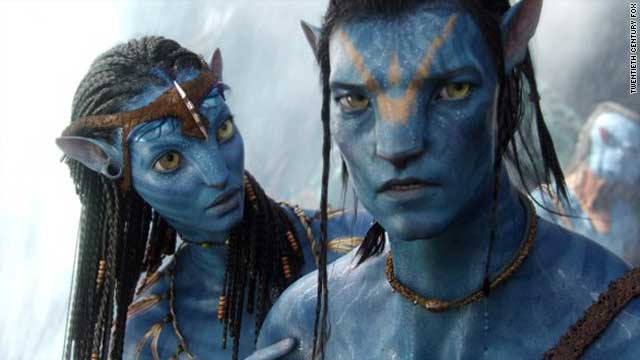
http://i.cdn.turner.com/
'Second, it is a narrative incarnation of the pagan worldview of earth worship as described in the Gaia Hypothesis, a scientific theory of planets as living organisms with consciousness. The notion of nature worship in opposition to the Judeo-Christian notion of man’s dominion over nature is an ancient theme that originates in Israel’s battle for the Promised Land with the pagan nature religion of the Canaanites' ( Brian Godawa, 2011)

http://hilery.files.wordpress.com/2010/10/princess_mononoke.jpg
' The story is a powerful tale of environmental abuse, disaster, and valiant honor. Land spirits, animal spirits, and various Gods figure prominently throughout the film and we see what happens when mankind falls out of balance with them.' (Krasskova, 2010)

http://tinribs27.files.wordpress.com/2011/09/wicker-man-lee.jpg?w=300&h=206
'The original “Wicker Man” is a story about sacrifice and renewal, about Pagan and Christian theological differences, and about sacral kingship' (Krassokova, 2010)

Bibliography

quotes

Brian Godawa. In: http://www.equip.org [online] At: http://www.equip.org/articles/avatar-a-postmodern-pagan-myth/ (Accessed on 29/10/12)